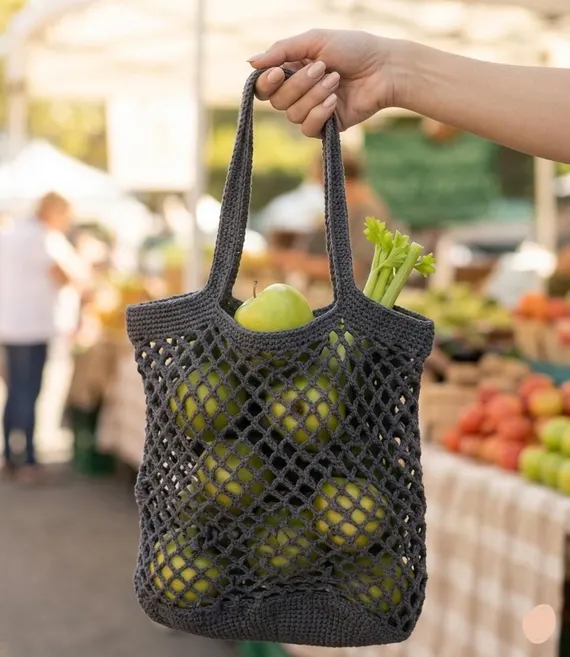
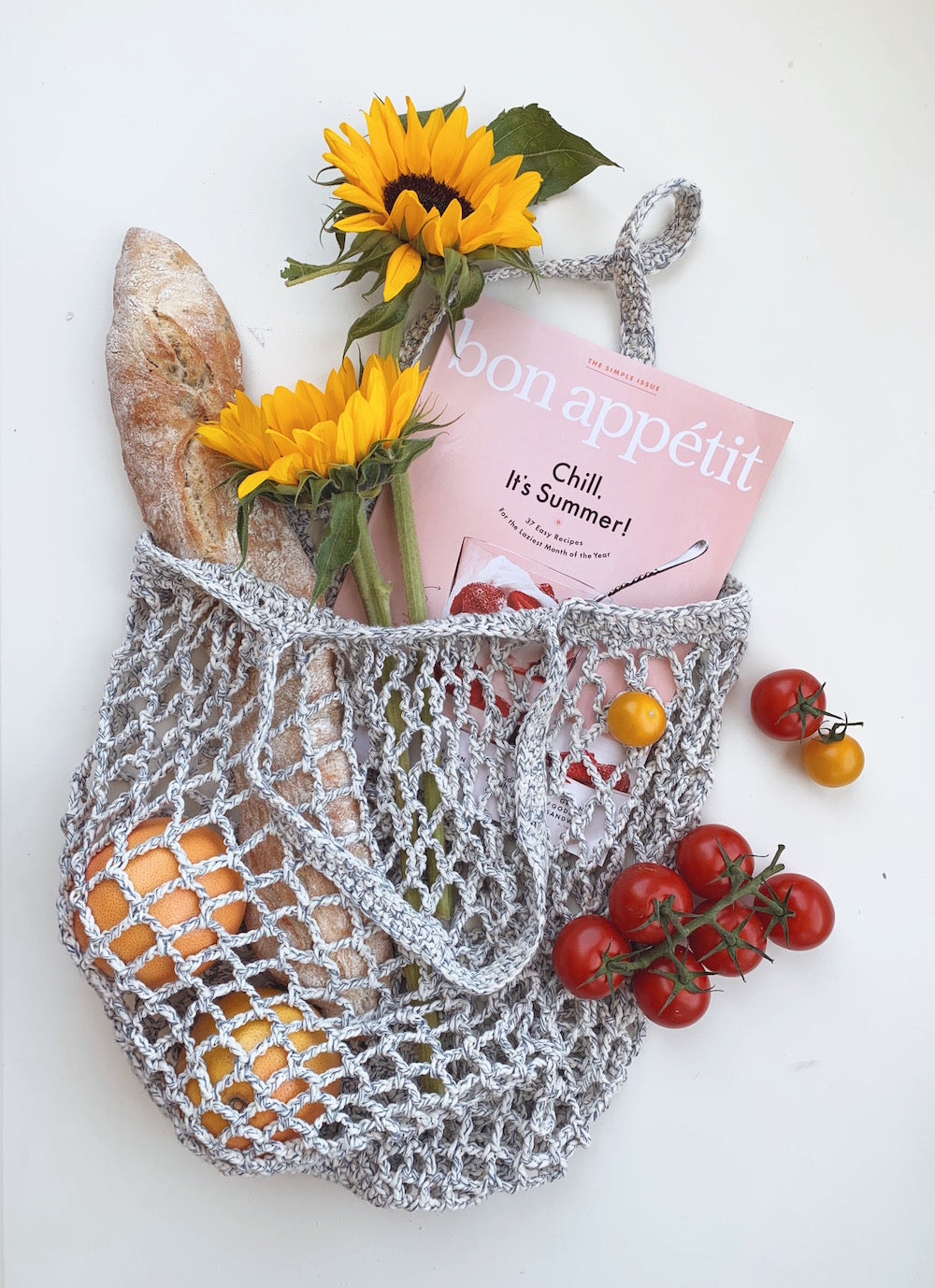
There is a moment, somewhere between the bread stall and the tomato stand, when a plastic bag would already be splitting at the handles — and your crocheted mesh bag simply… settles. The net stretches, the oranges nestle into the diamond holes, the bag wraps around its cargo like a hammock instead of fighting it. A woman at the cheese counter nods at it. Someone asks where you bought it. You say, with the calmest possible smile: "I made it."
This is not an article about a bag. It's an article about what the bag does to an errand.
Part One: The Geometry Secret (Why Mesh Beats Fabric)
Here's the counterintuitive logic at the heart of every crochet market bag: the holes are the storage. A solid tote has a fixed volume. A mesh bag starts small — roughly the size of your two hands cupped together — and grows toward its load. Drop in a melon, and the net expands. Carry only a baguette, and it contracts. The bag is not a container; it's an agreement between yarn and gravity.
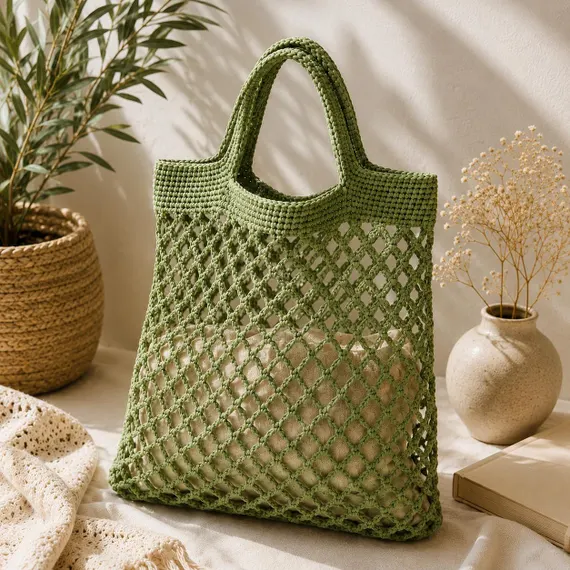
Crocheters call the classic structure a "mesh net": rows of chain stitches and double crochets that form diamonds. Under tension, those diamonds open; relaxed, they close. A relatively small amount of cotton can make a surprisingly roomy bag because the mesh uses yarn efficiently — far less material is spent on walls, and far more on structure.
And here's the quiet beauty of it: open mesh market bags have a long history, and the basic principle has changed surprisingly little. A flexible net expands around its load rather than relying on a rigid container. The physics hasn't changed in generations. Only the yarn has gotten softer.
Part Two: The Craft — What Your Hands Need to Know
(The practical part — written for your hands, not your Pinterest board.)
Choose your yarn like an engineer, not a decorator. A market bag works hard, so:
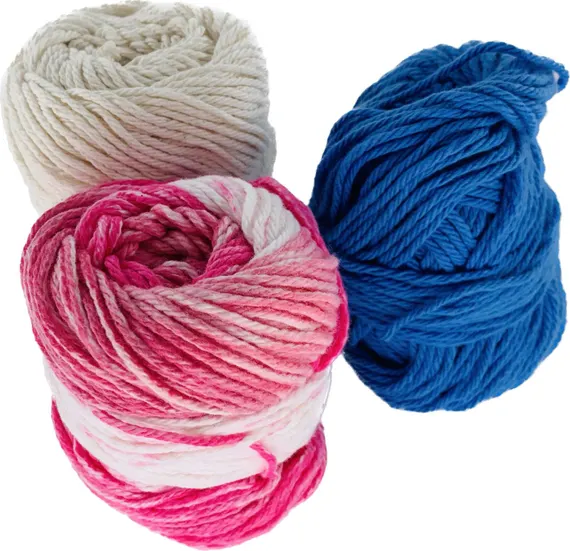
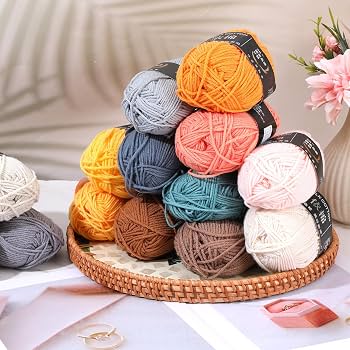
- Medium-weight cotton (or a cotton–linen blend) is a practical choice for many market bags. It gives the bag a relatively firm structure while remaining washable and durable — and it softens, rather than pills, with use.
- Recycled t-shirt yarn is the sturdy modern alternative: thick, forgiving, and practically indestructible. One old garment becomes a base. The trade-off: it's heavier, so the empty bag has presence.
- For a grocery bag, cotton is usually the more practical choice over pure acrylic: natural hand-feel, easy washing, and it ages gracefully.
The pattern logic — all market bags are the same four decisions:
- The base — a flat circle or oval (crocheted in rounds from a magic ring). Bigger base = wider bag.
- The mesh body — the repeating diamond or square net. This is the fast part; once the rhythm sets in, a round can take minutes.
- The top band — several solid rows of single crochet. This is the bag's belt: it stops the mesh from stretching upward and keeps handles anchored. Skip this and your bag becomes a funnel. Don't skip this.
- The handles — reinforced by crocheting over the existing band multiple times. For a shoulder bag, make the handles long enough to sit comfortably over your shoulder when the bag is loaded — and test them before finishing the ends.
A first bag can take several evenings, depending on the pattern and your crochet speed. Once the mesh rhythm becomes familiar, the body works up much faster.
Part Three: The Honest Part (Load, Care, and Failure Modes)
- Test before you trust. A well-made cotton mesh bag can carry a useful grocery load — but its safe capacity depends heavily on the yarn, construction, and handles. Fill yours with books at home and lift it. If the handles elongate more than a couple of centimeters, reinforce them. This five-minute test prevents a dramatic tomato incident in a parking lot.
- Wet cotton is honest cotton. Cotton can behave differently when wet, so wash and reshape the finished bag according to the yarn manufacturer's care instructions. For many cotton bags, reshaping while damp helps restore the intended form — and drying it over something means it dries in bag-shape, not blob-shape.
- The most common beginner mistake is mesh tension that's too tight — the bag will look like a solid potholder instead of a net. If your diamonds won't open under load, go up a hook size. The second most common mistake is too-loose handles; see "belt," above.
- It's not for everything. Pointy-edged packaging can poke through the mesh. Heavy bottles belong at the bottom, inside the solid base rounds, where the structure is strongest.
Part Four: The Ritual Itself
Now the part no pattern includes.
Saturday morning. The bag, empty and folded into itself, hangs by the door — it takes up less space than a fist. At the market, you fill it in a deliberate order: bread against the back, so it doesn't get crushed; soft tomatoes in the front pockets of mesh; flowers through a handle, stems down. The net keeps everything visible. There is no rummaging. There is no "where did the lemons go."
And here's the subtle transformation: the errand acquires a beginning, a middle, and an end. The bag opening is the beginning. The filling is the middle. Walking home with the net swinging against your hip, the produce still cool from the stall — that is the end. Three acts. A ritual.
There is something surprisingly powerful about giving an ordinary errand a small, repeatable ritual. Crocheters describe it more simply: the bag makes you want to go. That's not decoration doing that. That's thousands of small loops, made by your own hands, quietly insisting that this hour matters.

Final Thought
A crochet market bag will not save the planet by itself, and it will not make you a different person. What it will do is more precise: it will turn a chore into a ceremony, a container into a companion, and an ordinary Saturday into the kind of small, well-made hour that a well-made life is actually built from.
Thousands of loops. One ritual. Worth every one.
YOU MIGHT ALSO LOVE