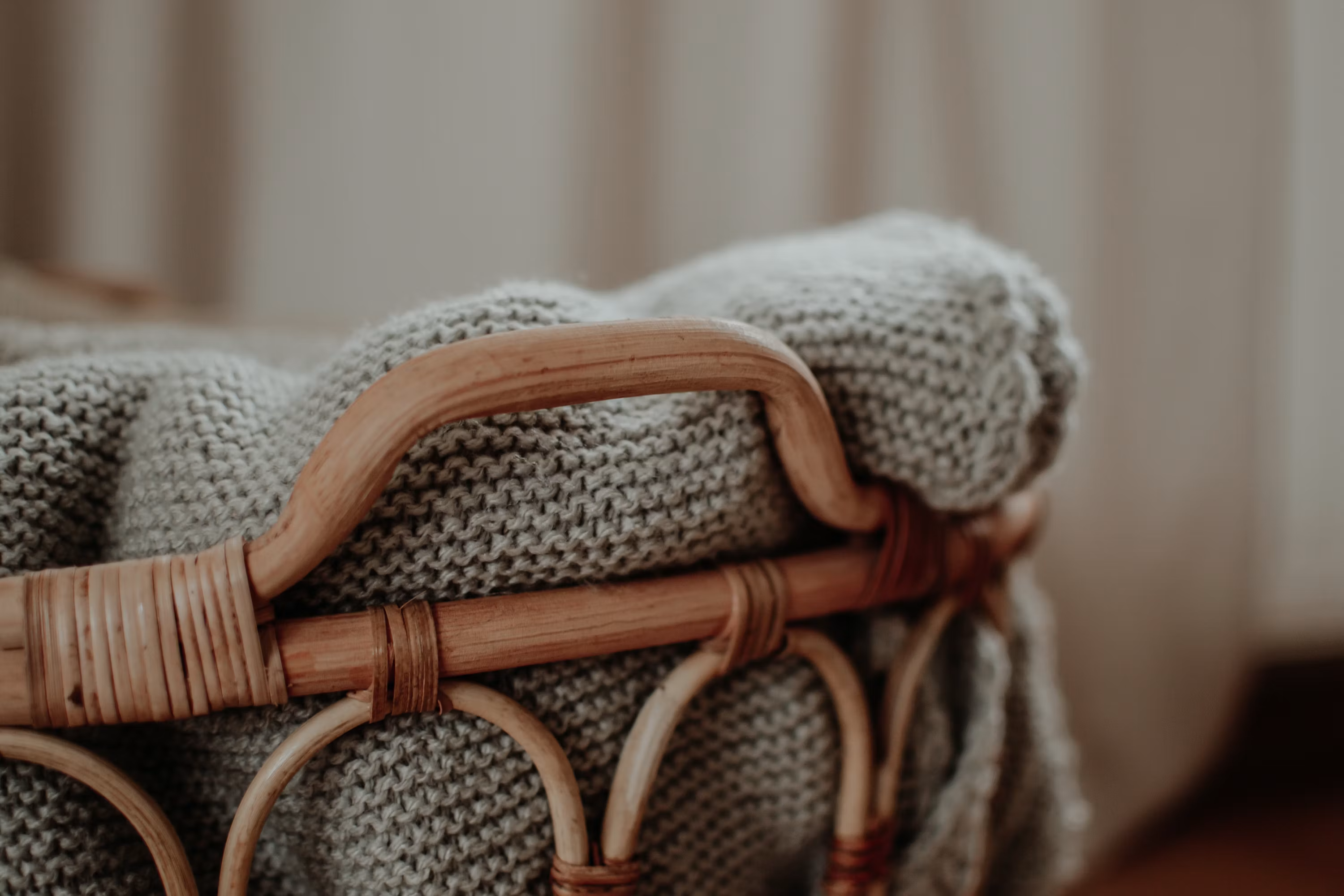
Or: Why Your Grandma's Afghan Deserves a Spa DayLet me tell you a secret that yarn stores don't want you to know: your crochet blanket is not an inanimate object. It is a textile diary. Every loop holds a story. That slightly uneven edge? That's the row where your aunt was watching a thriller and jumped at the plot twist. The impossibly tight stitch in the corner? That was made by someone thinking hard about a breakup. These items are memory keepers wrapped in wool, and yet—we toss them into the washing machine like they're gym socks.Shame on us. All of us.
Or: Why Your Grandma's Afghan Deserves a Spa Day
Let me tell you a secret that yarn stores don't want you to know: your crochet blanket is not an inanimate object. It is a textile diary. Every loop holds a story. That slightly uneven edge? That's the row where your aunt was watching a thriller and jumped at the plot twist. The impossibly tight stitch in the corner? That was made by someone thinking hard about a breakup. These items are memory keepers wrapped in wool, and yet—we toss them into the washing machine like they're gym socks.
Shame on us. All of us.
Act I: The Confession
First, admit your crimes. Have you ever thrown a handmade cardigan into a hot wash because you were "in a rush"? Have you watched in horror as a beloved crochet hat emerged from the dryer looking like it had been designed for a teacup chihuahua? Welcome to the club. The membership fee is one shrunken sweater and a heavy conscience.Here's the plot twist nobody expects: crochet items are more like houseplants than laundry. They don't want aggression. They want attention. They want you to look them in the eye (or the loop) and say, "I see you, you beautiful tangle of patience and time."Before we even talk about water, let's talk about reading. Not poetry—labels. If your item came with care instructions, treat that scrap of paper like a treasure map. If it didn't, assume the yarn is a drama queen until proven otherwise. Cotton plays it cool. Wool is the sensitive artist. Acrylic is the easygoing friend who forgives everything. But even acrylic has limits. Don't test them.
First, admit your crimes. Have you ever thrown a handmade cardigan into a hot wash because you were "in a rush"? Have you watched in horror as a beloved crochet hat emerged from the dryer looking like it had been designed for a teacup chihuahua? Welcome to the club. The membership fee is one shrunken sweater and a heavy conscience.
Here's the plot twist nobody expects: crochet items are more like houseplants than laundry. They don't want aggression. They want attention. They want you to look them in the eye (or the loop) and say, "I see you, you beautiful tangle of patience and time."
Before we even talk about water, let's talk about reading. Not poetry—labels. If your item came with care instructions, treat that scrap of paper like a treasure map. If it didn't, assume the yarn is a drama queen until proven otherwise. Cotton plays it cool. Wool is the sensitive artist. Acrylic is the easygoing friend who forgives everything. But even acrylic has limits. Don't test them.
Act II: The Baptism
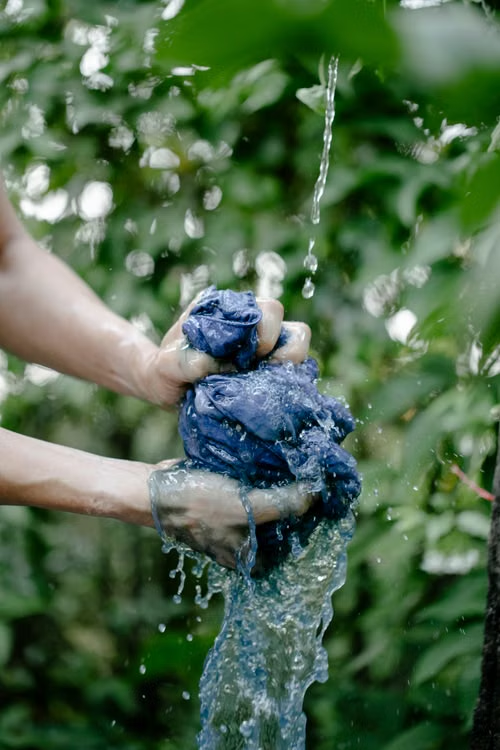
Now, the water. And here's where logic takes a vacation.You might think: Hot water kills germs, so hot water is good. Wrong. Hot water is the villain of this story. Hot water is what turns a lovingly crafted shawl into a felted coaster. The golden rule—scratch that, the platinum rule—is: cold or lukewarm water only. Think of the temperature you'd use to bathe a newborn kitten. That level of tenderness.Fill a basin. Not the sink where you washed dishes yesterday. A clean basin. Add a splash of mild detergent—baby shampoo works beautifully in a pinch, and here's why: if it's gentle enough for a baby's scalp, it's gentle enough for forty hours of someone's crochet labor. Swirl the water with your hand until it looks like a tiny, fragrant ocean.Then lower the item in. Slowly. Dramatically. Imagine you're lowering a treasure chest into the sea.Do not wring. I repeat: do not wring. Wringing is how you turn art into anxiety. Instead, press. Gently. Squeeze the water out like you're coaxing secrets from a shy friend. If the water turns slightly colored, don't panic. Some yarns are simply dramatic and like to release a little dye as a form of self-expression. It's their version of a moody sigh.Rinse the same way—gentle, patient, repetitive. Think of it as a meditation. If you're stressed, your crochet item can feel it. (Okay, scientifically maybe not, but why risk it?)
Act III: The Secret Life of Stitches
Here's where things get weird—in a good way.Did you know that wool has memory? It's true. Wool fibers remember the shape they were in when they dried. This is both magical and terrifying. It means if you dry your crochet sweater flat in the right shape, it will return to that shape like a loyal dog. But if you hang it dripping wet like a criminal in a dungeon, it will stretch, sag, and never forgive you.The drying process is where most crochet care goes to die. People think: I'll just drape it over a chair. No. That chair will leave a crease that haunts you for years. People think: The dryer on low won't hurt. Oh, but it will. It will hurt everything.Lay your item on a clean, dry towel. Roll the towel up with the item inside, like a sleeping bag for a very tired textile. Press gently to remove excess water. Then unroll, reshape the item with your hands—this is called "blocking," and it sounds technical but it's really just you being a sculptor with damp yarn—and lay it flat on a fresh dry towel or a blocking mat if you're fancy.Walk away. Let it dry naturally. This takes time. Crochet does not believe in microwave culture. Crochet believes in slow living. In a world of instant everything, your handmade item is a rebellion. Treat it like one.And here's the unexpected truth: the time you spend caring for your crochet item is time it spends caring for you. There's a reason people wrap themselves in handmade blankets when they're sad. These objects hold intention. They hold hours of someone's life. When you wash them with care, you're not just cleaning fabric. You're maintaining a relationship.
Lay your item on a clean, dry towel. Roll the towel up with the item inside, like a sleeping bag for a very tired textile. Press gently to remove excess water. Then unroll, reshape the item with your hands—this is called "blocking," and it sounds technical but it's really just you being a sculptor with damp yarn—and lay it flat on a fresh dry towel or a blocking mat if you're fancy.
Walk away. Let it dry naturally. This takes time. Crochet does not believe in microwave culture. Crochet believes in slow living. In a world of instant everything, your handmade item is a rebellion. Treat it like one.
And here's the unexpected truth: the time you spend caring for your crochet item is time it spends caring for you. There's a reason people wrap themselves in handmade blankets when they're sad. These objects hold intention. They hold hours of someone's life. When you wash them with care, you're not just cleaning fabric. You're maintaining a relationship.
Act IV: The Legacy
Storage. The final frontier.Do not—under any cosmic circumstances—store crochet items in plastic bags. Plastic traps moisture, and trapped moisture breeds mildew, and mildew turns your treasured heirloom into a science experiment. Use cotton storage bags, or old pillowcases if you're feeling resourceful. Add a sachet of lavender or cedar blocks to keep moths away. Moths, by the way, are the true enemies of crochet. They have no respect for art.Every few months, take your stored items out. Air them. Let them breathe. Fold them differently so they don't develop permanent creases. Talk to them if you want. I'm not here to judge.If you're a maker, consider attaching a care label to your creations. Not because you're obsessive, but because you're generous. You're giving the next owner a cheat code to keep the magic alive. "Hand wash cold, lay flat to dry"—eight words that can save a hundred hours of work.
Storage. The final frontier.
Do not—under any cosmic circumstances—store crochet items in plastic bags. Plastic traps moisture, and trapped moisture breeds mildew, and mildew turns your treasured heirloom into a science experiment. Use cotton storage bags, or old pillowcases if you're feeling resourceful. Add a sachet of lavender or cedar blocks to keep moths away. Moths, by the way, are the true enemies of crochet. They have no respect for art.
Every few months, take your stored items out. Air them. Let them breathe. Fold them differently so they don't develop permanent creases. Talk to them if you want. I'm not here to judge.
If you're a maker, consider attaching a care label to your creations. Not because you're obsessive, but because you're generous. You're giving the next owner a cheat code to keep the magic alive. "Hand wash cold, lay flat to dry"—eight words that can save a hundred hours of work.