There is a peculiar geometry to the way a scarf frames a face. Not the factory-made kind that hangs like a uniform strip of fabric, obedient and forgettable. But a crochet scarf — one that holds the memory of your hands in every loop, that settles against your collarbone with the slight irregularity of something alive. It does not merely warm your neck. It announces that you have decided to move through the world with intention.
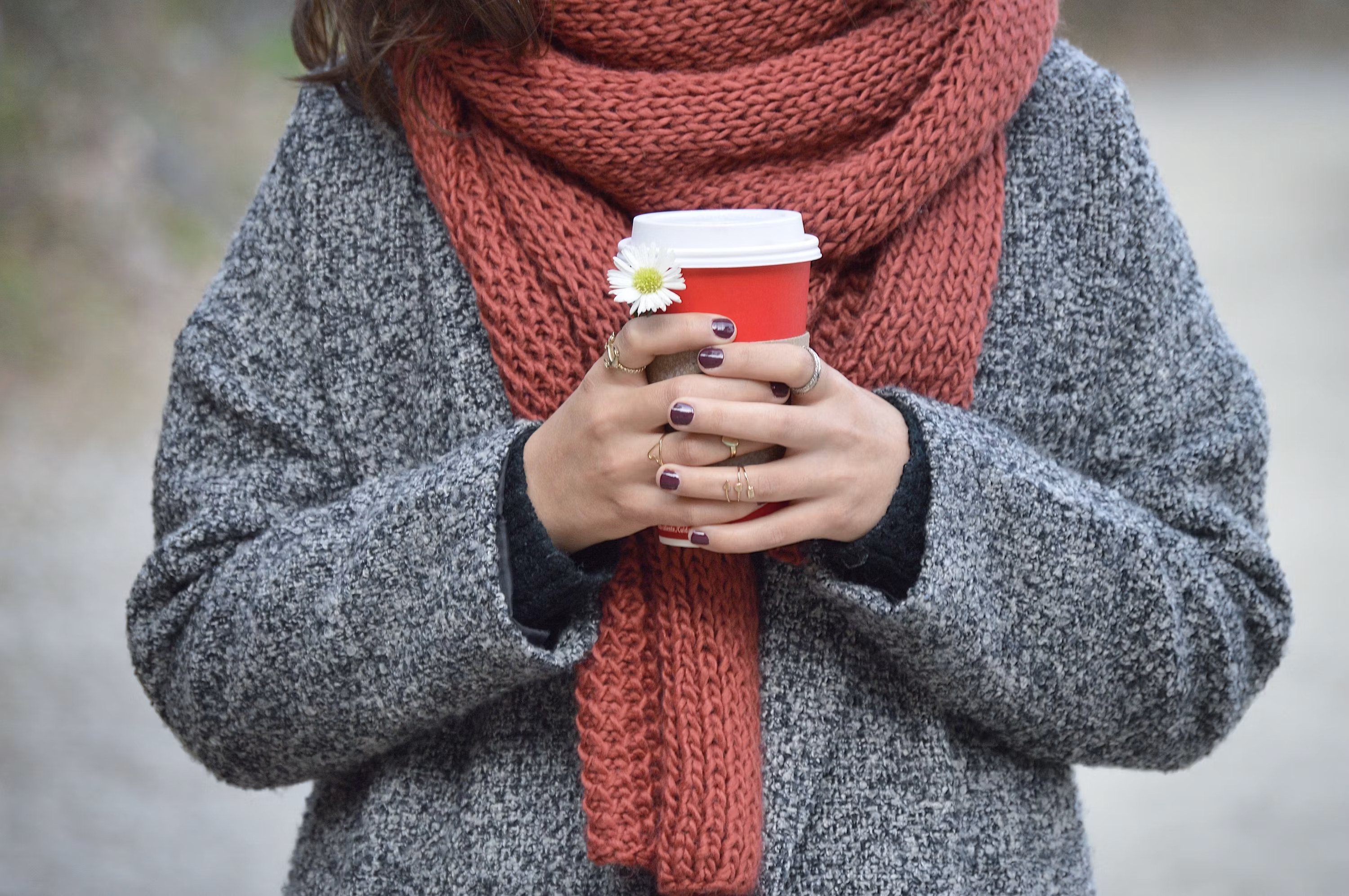
What if the most versatile piece in your wardrobe is not a designer bag or a tailored coat, but a rectangle of yarn you made yourself?
The mistake most people make is thinking of a scarf as winter equipment. A survival tool for January. But the right crochet scarf — in the right fiber, with the right stitch, at the right dimensions — becomes a year-round companion. It is a shawl on a breezy spring morning. It is a statement piece over a white tee in September. It is the only thing standing between you and an over-air-conditioned café in July.
Below are five crochet scarf styles that transcend seasons, with the exact yarns, yardage, stitches, and time estimates that make them wearable from January to December.
1. The Lightweight Lace Scarf: Air You Can Wear
The first rule of all-season crochet is counterintuitive: the scarf must breathe. Not gaps that let the wind punish you, but deliberate negative space — lace, mesh, openwork — that allows air to move through the fabric so you do not overheat.
What makes it work:
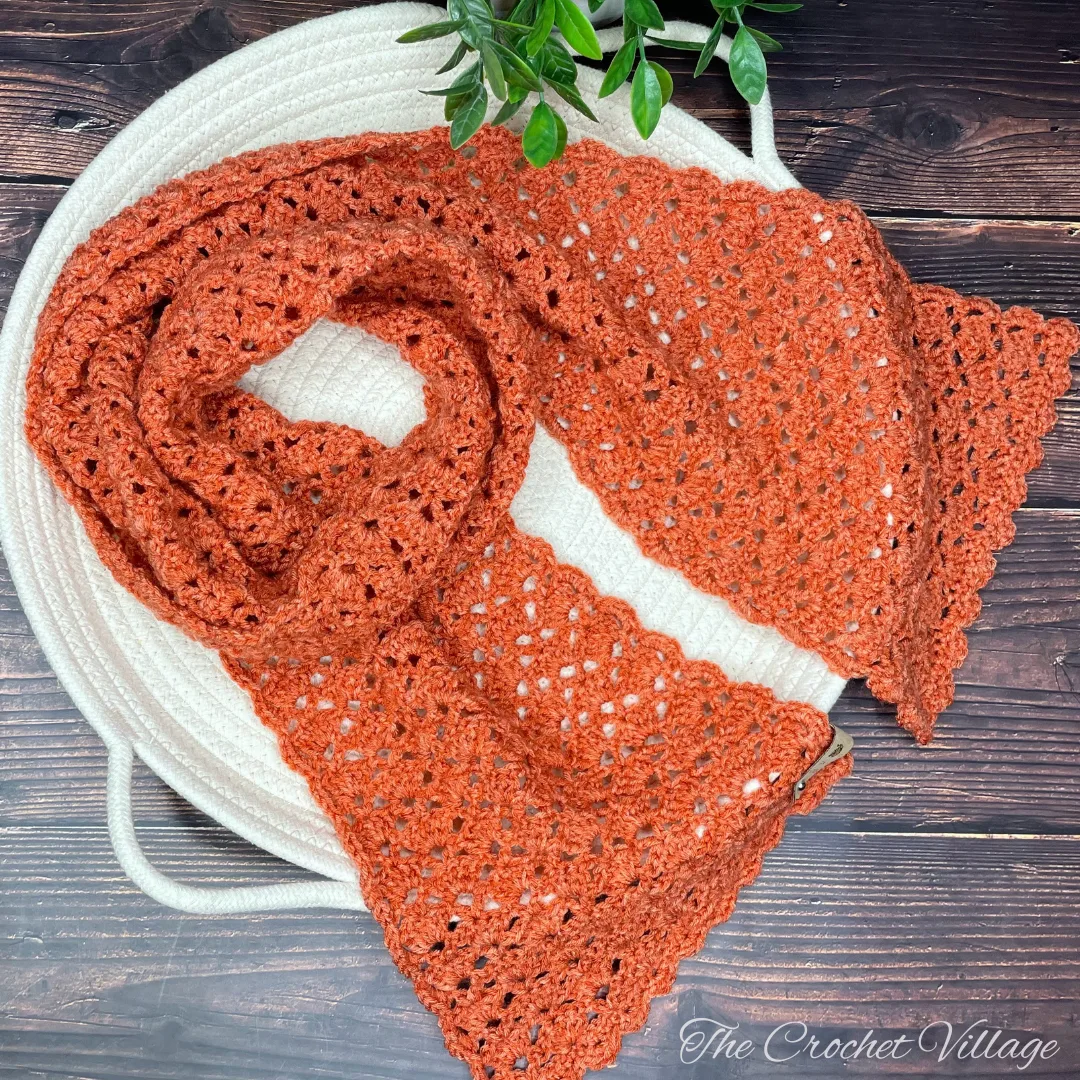
- The stitch: Use V-stitch (double crochet + chain-1 + double crochet in one space), filet crochet, or shell stitch with chains between. These create a light, airy fabric that reads as substantial but weighs almost nothing.
- The yarn: Choose cotton-bamboo blend (DK weight) or linen-cotton (sport weight). These fibers are cool against the skin, drape like water, and actually improve with washing.
- The dimensions: 25 cm wide × 180 cm long (10 in × 70 in). Any narrower and it looks like a shoelace. Any shorter and it does not wrap with authority.
- The edge: Add a single-row picot border or a crab stitch edge. The slight ruffle catches light and movement, transforming a simple rectangle into something that looks imported from a Mediterranean boutique.
Color strategy: For maximum versatility, work in a muted sage, dusty rose, or warm sand. These shades complement both winter coats and summer dresses.
Yardage: Approximately 250–300 meters (275–330 yards) of DK-weight yarn.
Time to make: 6–8 hours, depending on your pace and the complexity of the lace pattern.
Budget: Typically 1–2 skeins, depending on the final length. One ball of Scheepjes Linen Soft or Debbie Bliss Eco Baby will often suffice for the standard size.
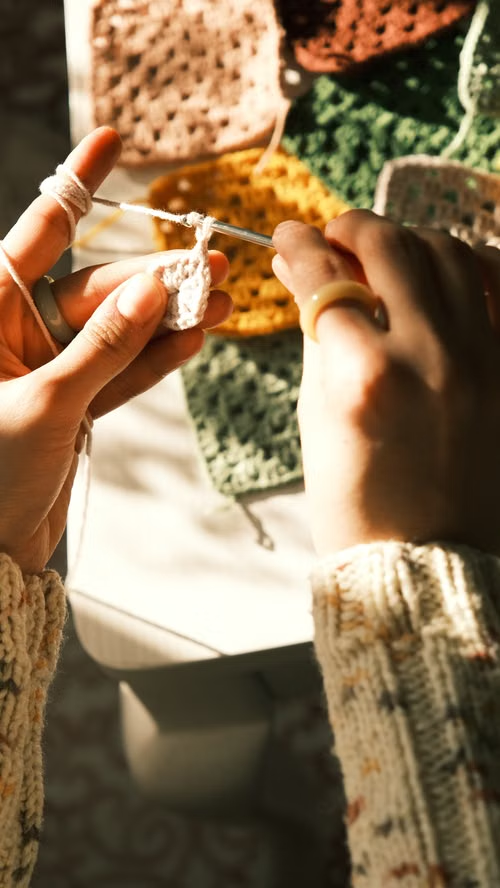
2. The Chunky Cowl: Winter Armor That Knows When to Stop
A cowl is not a scarf that gave up. It is a scarf that got smart. No trailing ends to catch in car doors. No re-tying every twenty minutes. Just a tube of warmth that you pull over your head and forget.
What makes it work:
- The stitch: Use front-post and back-post double crochet to create a vertical rib. This stitch has natural elasticity — the cowl hugs your neck without strangling it. Alternatively, the moss stitch (single crochet + chain-1) creates a dense, woven texture that looks like expensive knitwear.
- The yarn: Super-bulky merino or alpaca blend. The fiber must be soft enough to touch your bare neck. Test it: hold the yarn against the inside of your wrist for thirty seconds. If it itches, your neck will hate it.
- The dimensions: Circumference 60 cm × height 30 cm (24 in × 12 in) for a single-loop cowl. For a double-loop (wrap it twice), make it 140 cm × 25 cm (55 in × 10 in). The double-loop is more versatile — it functions as both a neck warmer and a loose cowl.
- The seam: Crochet the cowl in the round to eliminate the seam entirely. If you must seam, use the whip stitch on the inside and weave in ends with surgical precision. A visible seam is the fastest way to make handmade look homemade.
Transition trick: In spring, wear the double-loop cowl loose and low, almost like a necklace over a button-down shirt. In winter, pull it high and tuck the bottom edge into your coat collar.
Yardage: Approximately 150–200 meters (165–220 yards) of super-bulky yarn.
Time to make: 3–4 hours. This is the perfect weekend project.
Budget: $20–$35 in yarn. Wool and the Gang Crazy Sexy Wool or Lion Brand Hue + Me are excellent.
3. The Oversized Wrap Scarf: A Blanket You Can Leave the House In
There is a special kind of person who needs an oversized wrap scarf. Usually, this person is always cold. Or always reading in drafty corners. Or both.
What makes it work:
- The stitch: Use granite stitch or linen stitch for a flat, non-curling fabric. These stitches create a woven appearance that looks like a textile, not a craft project. For texture, add a cable panel running down the center — crochet cables are easier than they look and add instant sophistication.
- The yarn: Worsted-weight wool-acrylic blend (60/40) for structure without excessive weight. Pure wool in this size becomes a burden. Pure acrylic often lacks the drape and texture associated with premium garments. The blend gives you warmth, washability, and drape.
- The dimensions: 50 cm × 200 cm (20 in × 80 in) minimum. This is not a scarf. This is a personal landscape. It should wrap around your shoulders twice and still have length to drape.
- The fringe: Add 15 cm (6 in) fringe at both ends using the same yarn, cut evenly with a rotary cutter. Fringe transforms a rectangle into a statement. No fringe, and it looks like a table runner.
All-season hack: In summer, use this as a plane blanket, a beach cover-up, or a picnic mat. In winter, it is your primary defense against existential chill.
Yardage: Approximately 700–900 meters (765–985 yards) of worsted-weight yarn.
Time to make: 12–15 hours. This is a commitment, but one that pays for itself every time you wear it.
Budget: $30–$50 in yarn. You will need 3–4 skeins.
4. The Infinity Scarf: The Circle of Sanity
The infinity scarf is the only scarf that understands modern life. It does not require tying. It does not require folding. It simply loops, and in looping, it solves every styling problem you have.
What makes it work:
- The stitch: Use half-double crochet in the back loop only for a ribbed effect that mimics knitwear. Or try star stitch for a dense, puffy texture that traps air and warmth. The star stitch looks complicated but repeats predictably once you learn the rhythm.
- The yarn: DK-weight merino or merino-silk blend for a lighter infinity scarf that works indoors and out. For a winter-only version, use bulky alpaca.
- The dimensions: 150 cm circumference × 25 cm width (60 in × 10 in) for a standard loop. For a long infinity that you can wrap twice, go to 180 cm × 20 cm (70 in × 8 in). The long version is more versatile — one loop for style, two loops for warmth.
- The twist: Before joining the ends, give the strip one half-twist (like a Möbius strip). This creates a figure-eight drape that sits flatter against the chest and never bunches.
Styling: Wear it long and loose with a leather jacket in autumn. Double it up under a wool coat in February. Let one loop hang low like a necklace over a summer dress in May.
Yardage: Approximately 350–450 meters (385–495 yards) of DK-weight yarn.
Time to make: 5–6 hours.
Budget: $18–$30 in yarn. Typically 2–3 skeins.
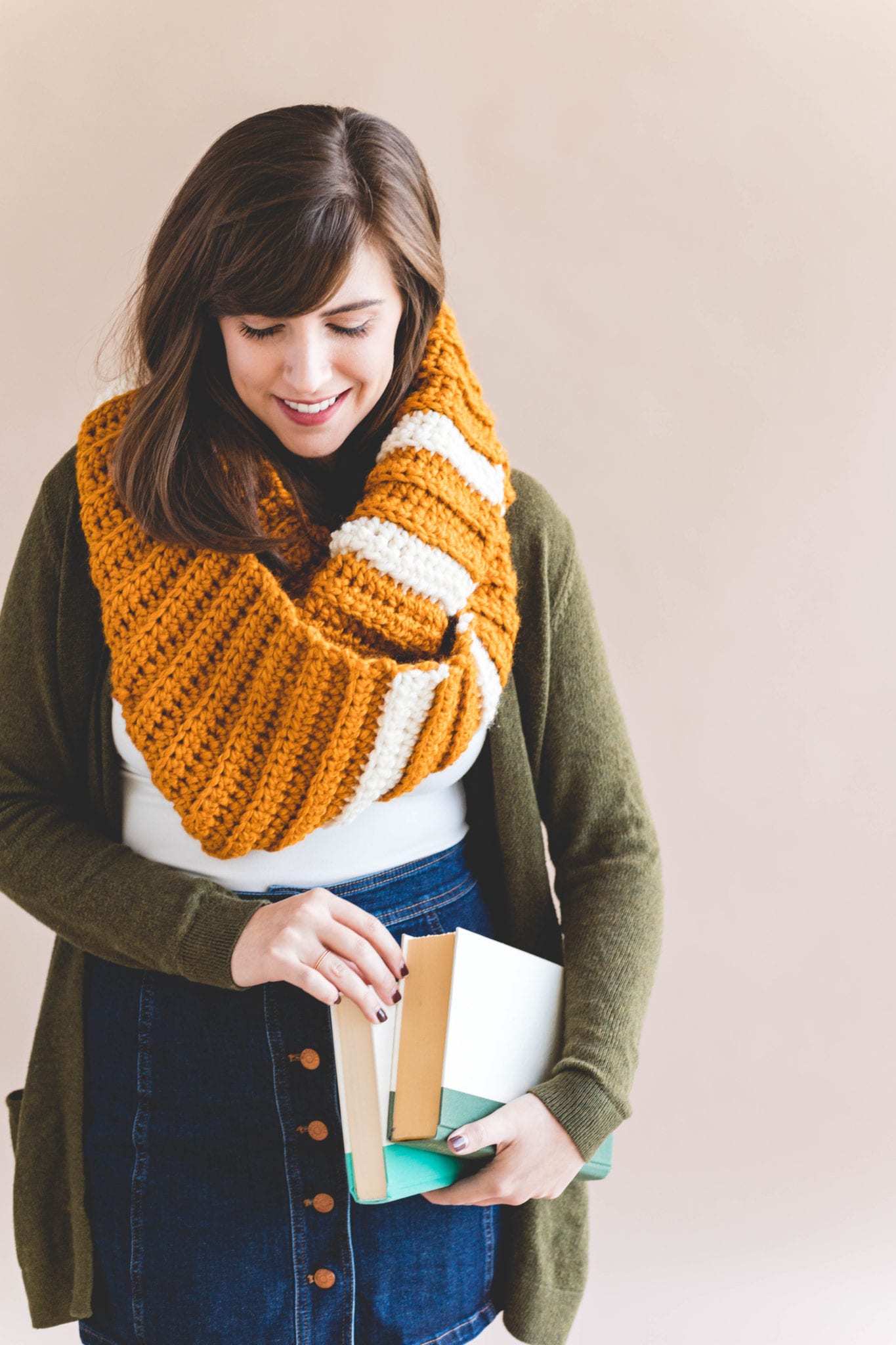
5. The Hooded Scarf: When a Scarf Becomes Architecture
A hooded scarf is not an accessory. It is a shelter. It is the intersection of scarf, hood, and cowl — a three-in-one garment that makes people stop you on the street.
What makes it work:
- The construction: Crochet a standard scarf (30 cm × 150 cm), then fold one end upward to create a hood pocket. Seam the sides for 30 cm (12 in), leaving the top open. The result: a scarf with a built-in hood that does not require drawstrings, buttons, or prayers.
- The stitch: Use thermal stitch or waistcoat stitch for the hood section — these are dense and wind-resistant. Use a lacier stitch for the scarf ends to keep the overall weight manageable.
- The yarn: Worsted-weight wool or wool-blend for structure. The hood needs body to stand up, so avoid droopy fibers like cotton or bamboo for this section.
- The depth: The hood should be 30 cm deep (12 in) from base to crown. Any shallower and it slides off. Any deeper and you look like you are wearing a yarn sleeping bag.
When to wear it: Rainy October mornings. Snowy February dog walks. Airplane cabins where the vent is aimed directly at your skull.
Yardage: Approximately 400–500 meters (440–550 yards) of worsted-weight yarn.
Time to make: 8–10 hours.
Budget: $25–$40 in yarn.
Quick Reference: Choose Your Scarf by Season
Table
| Season | Scarf Style | Best Yarn | Yardage | Time | Dimensions |
|---|---|---|---|---|---|
| Spring | Lightweight lace | Cotton-bamboo, DK | ~250–300 m | 6–8 hrs | 25 × 180 cm |
| Summer | Lightweight lace / Infinity | Linen-cotton, sport | ~250–300 m / ~350–450 m | 6–8 hrs / 5–6 hrs | 25 × 180 cm or 150 × 20 cm loop |
| Autumn | Chunky cowl / Infinity | Merino, super-bulky / DK | ~150–200 m / ~350–450 m | 3–4 hrs / 5–6 hrs | 60 × 30 cm or 150 × 25 cm loop |
| Winter | Oversized wrap / Hooded | Wool-acrylic, worsted | ~700–900 m / ~400–500 m | 12–15 hrs / 8–10 hrs | 50 × 200 cm or 30 × 150 cm hooded |
| All year | Infinity (DK weight) | Merino-silk, DK | ~350–450 m |
The Finishing Details That Elevate Everything
- Block your scarf. Every time. Soak in lukewarm water with a drop of wool wash, squeeze (do not wring), pin to dimensions, and let dry. Blocking transforms lumpy handmade into intentional artisanal.
- Weave in ends with a tapestry needle, not a crochet hook. Thread the yarn diagonally through three rows of stitches. Cut flush. Invisible ends are the mark of a professional.
- Add a leather tag or a small fabric label with your initials. It costs next to nothing and can significantly increase the perceived value.
- Photograph it worn. A scarf on a table is yarn. A scarf on a person is fashion.
The Final Loop
A crochet scarf is not an object. It is a decision. A decision to spend six, eight, or fifteen hours making something that a machine could produce in seconds — because the machine cannot replicate the particular warmth of your hands, the particular color you chose at dusk in a yarn shop, the particular patience you discovered you had.
The best crochet scarves are not the ones with the most complicated stitches. They are the ones you actually wear. The ones that live in your bag, your car, the hook by your door. The ones that have absorbed your perfume, your coffee spills, your rain.
Make one for every season. Make one for every mood. And then wear them like the armor they are — not against the cold, but against the rush of a world that forgot how to make things slowly.