I once spent three weeks crocheting what I believed would be the centerpiece of my living room. A mandala. Dozens of rounds. Hundreds of color changes. When I finally blocked it and held it up, it was beautiful — and completely invisible against my white wall. It looked like a colorful pancake that had given up on gravity. I pinned it, framed it, even tried leaning it on a shelf. Nothing worked. It was not a wall hanging. It was a very patient doily with delusions of grandeur.
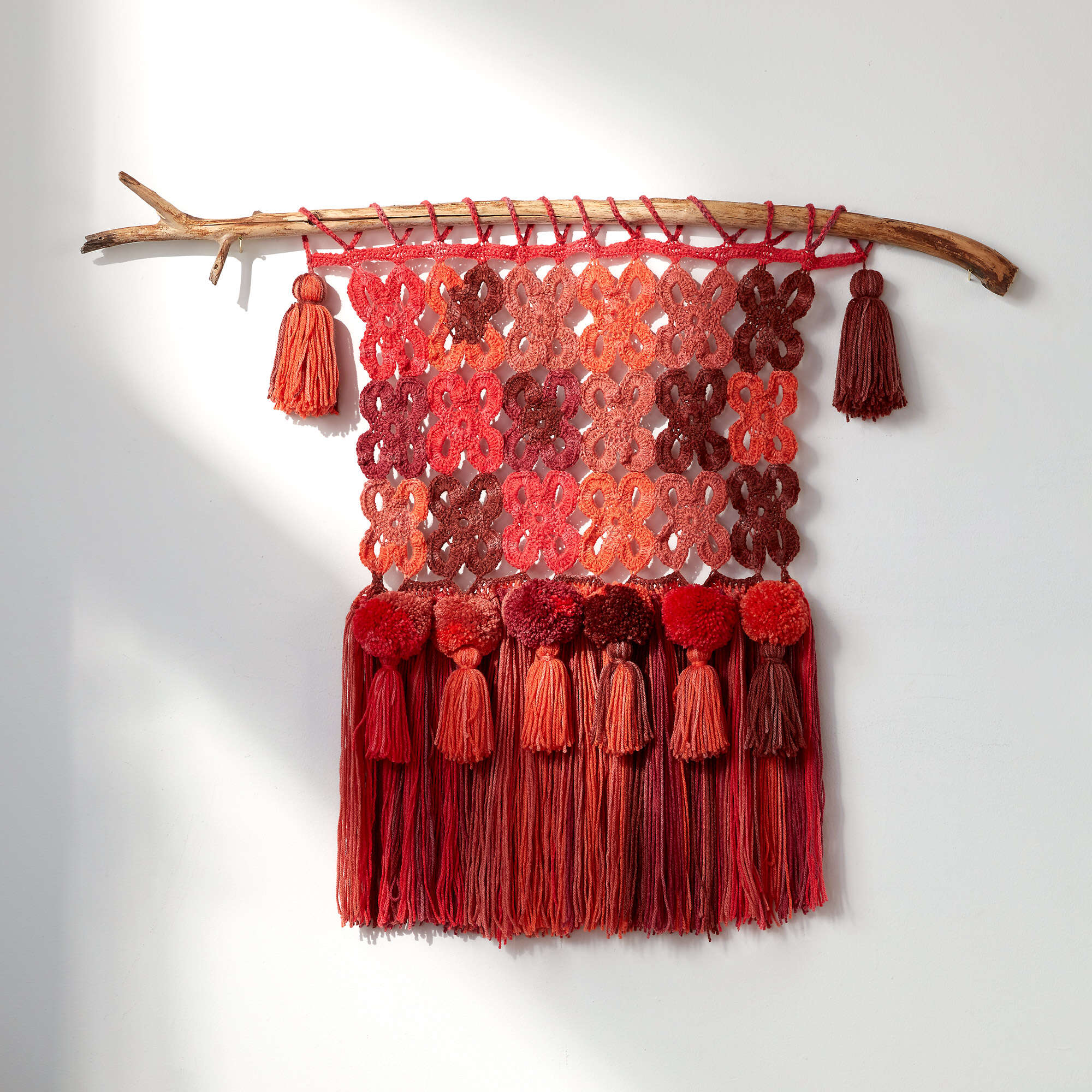
That mandala taught me the difference between a crochet circle and a crochet wall hanging: the dowel, the fringe, and the intention.
Before we begin, let me save you from the same mistake. Most crochet mandala patterns stop at the last round, as if the piece is finished simply because the yarn ran out. But a mandala without a hanging system is a coaster for a giant. Below is the complete method — from the center ring to the final fringe — for a boho wall tapestry that actually belongs on a wall.
3 Mistakes That Make Crochet Wall Hangings Look Like Doilies
The Center Is Too Heavy
A mandala that grows outward evenly becomes denser and heavier at the edges. When you hang it, the center sags like a tired trampoline. The shape that was perfect on the table becomes an oval on the wall.
The fix: Work the final three rounds in a lighter stitch — chain spaces, picots, or mesh — so the outer edge is airier than the center. This redistributes visual weight and keeps the piece flat against the wall.
There Is No Hanging Mechanism
I have seen people tape their crochet mandalas to the wall. I have seen them use thumbtacks through the yarn. I have seen them lean them against bookshelves and pretend it was a stylistic choice. A wall hanging needs a structure that holds it vertically.
The fix: Mount the mandala on a wooden dowel or driftwood branch. Crochet a hanging loop at the top during the final round, or sew a fabric sleeve to the back. The dowel does the structural work so the yarn does not have to.
The Fringe Is an Afterthought
A mandala without fringe is a plate. A mandala with fringe is a tapestry. The fringe adds movement, length, and gravity. It turns a decorative circle into a statement piece.
The fix: Cut fringe twice as long as you think you need. Short fringe looks apologetic. Long fringe looks intentional.
Materials You Need
- Yarn: Cotton or cotton-blend DK or worsted weight, approximately 200 to 300 meters total in 3 to 4 colors. For the ocean palette in the photograph, use teal, mustard, cream, and sand.
- Hook: 4 mm (US G) or 4.5 mm (US 7).
- Wooden dowel or driftwood: 30 to 40 cm long, 1.5 to 2 cm in diameter.
- Stitch marker: Essential for tracking rounds.
- Tapestry needle: For weaving in ends and attaching fringe.
- Scissors: Sharp enough to cut clean fringe.
Gauge: Not critical for wall hangings, but your stitches should be tight enough that the mandala holds its shape. If the fabric is too loose, the piece will droop.
The Mandala: A Simplified Pattern
This is a 12-round mandala designed specifically for wall hanging. The final rounds create an open, airy border that keeps the piece light.
Round 1: Chain 4. Join with a slip stitch to form a ring. Chain 3 (counts as first double crochet), work 11 double crochet into the ring. Join with a slip stitch. You now have 12 stitches.
Round 2: Chain 3. Work 2 double crochet in each stitch around. Join. You now have 24 stitches.
Round 3: Chain 3. Work 1 double crochet in the next stitch, 2 double crochet in the next stitch. Repeat from * around. Join. You now have 36 stitches.
Round 4: Chain 3. Work 1 double crochet in each of the next 2 stitches, 2 double crochet in the next stitch. Repeat from * around. Join. You now have 48 stitches.
Round 5: Chain 3. Work 1 double crochet in each of the next 3 stitches, 2 double crochet in the next stitch. Repeat from * around. Join. You now have 60 stitches.
Round 6: Switch to color 2. Chain 1. Work 1 single crochet in each stitch around. Join.
Round 7: Chain 4 (counts as double crochet + chain-1). Skip 1 stitch, work 1 double crochet in the next stitch, chain 1. Repeat from * around. Join. This creates a mesh ring.
Round 8: Switch to color 3. Chain 3. Work 2 double crochet in each chain-1 space around, with 1 chain between each cluster. Join.
Round 9: Chain 3. Work 1 double crochet in each of the next 4 stitches, 2 double crochet in the next stitch. Repeat from * around. Join.
Round 10: Switch to color 4. Chain 1. Work 1 single crochet in each stitch around. Join.
Round 11: Chain 5 (counts as double crochet + chain-2). Skip 2 stitches, work 1 double crochet in the next stitch, chain 2. Repeat from * around. Join. This open round reduces weight at the edge.
Round 12: Chain 1. Work 1 single crochet in each stitch and each chain space around. At every 6th stitch, work chain 8, slip stitch back into the same stitch to create a hanging loop. Make 3 to 4 loops evenly spaced. Join and fasten off.
Blocking: Soak the mandala in lukewarm water for 15 minutes. Pin it to a foam board in a perfect circle. Let it dry completely. Blocking is not optional — it is the difference between a rug and a tapestry.
The Dowel and the Fringe
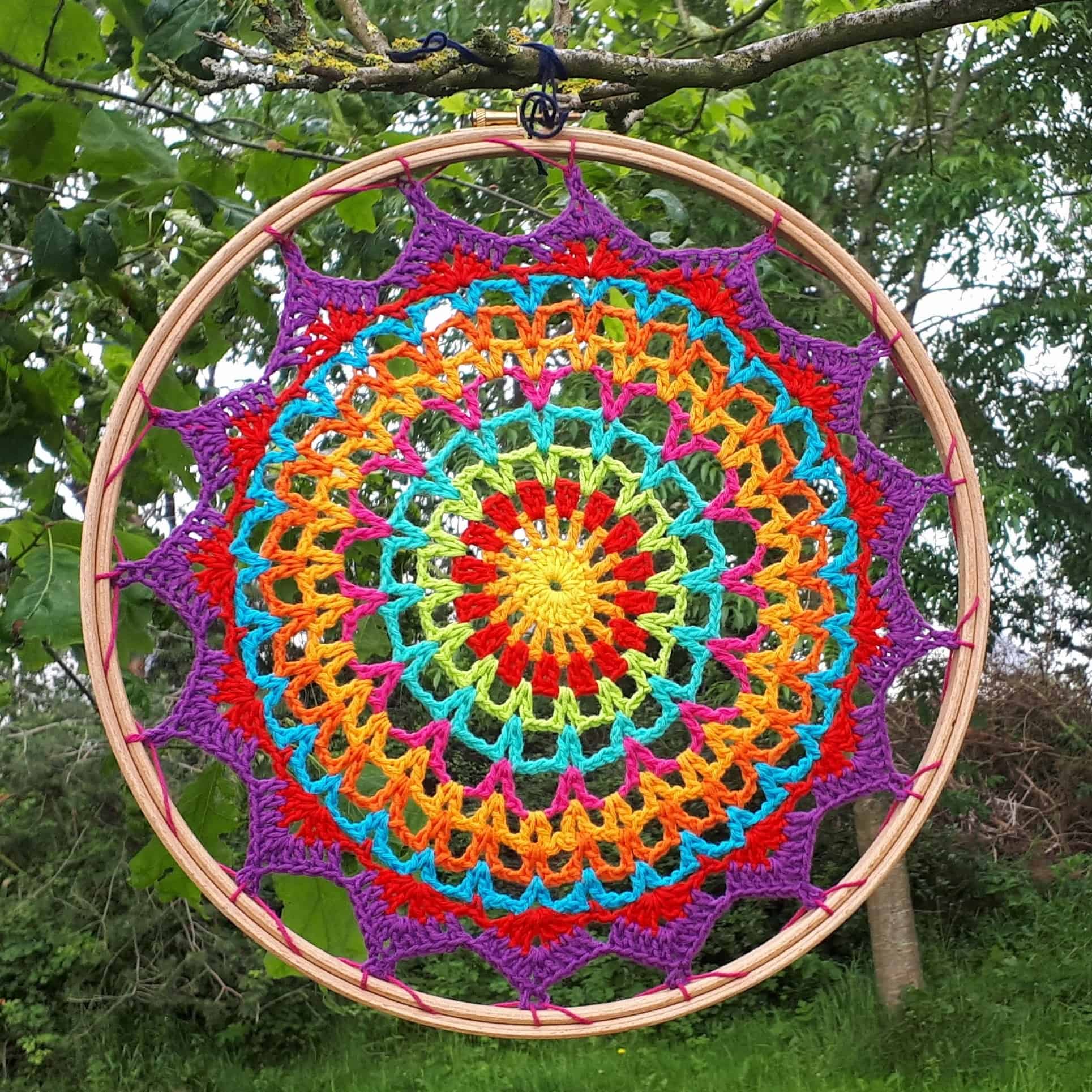
Attaching the dowel: Thread the hanging loops over the dowel. If using driftwood, wrap the loops twice for security. The dowel should sit horizontally, with the mandala hanging evenly.
The fringe: Cut 40 to 50 strands of yarn, each 40 cm long (16 inches). Fold each strand in half. Use a lark's head knot to attach them to the bottom edge of the mandala — work through the stitches of Round 10 or 11. Space the fringe evenly, approximately 1 cm apart.
Trimming: Once all fringe is attached, comb it with your fingers and trim the ends to a gentle V-shape or leave them uneven for a more organic look.
Hanging and Styling
Height: Hang the center of the mandala at eye level — approximately 150 to 160 cm from the floor. Any higher and it floats. Any lower and it competes with the furniture.
Wall color: A white or cream wall makes the colors pop. A dark navy or charcoal wall makes the piece glow. Avoid busy wallpaper — the mandala is already doing enough visual work.
Context: Place a potted plant — a fiddle-leaf fig or a trailing pothos — to one side. The organic green softens the geometry and makes the wall feel like a curated corner, not a craft display.
FAQ
How long does it take to crochet a wall hanging mandala?
This 12-round pattern takes 6 to 10 hours, including fringe and finishing.
What yarn is best for wall hangings?
Cotton or cotton-blend DK weight. It holds blocking well and drapes cleanly. Avoid fuzzy yarns — they obscure the stitch definition.
Do I need to block a wall hanging?
Yes. Blocking opens the stitches, evens the shape, and ensures the piece lies flat against the wall.
Can I use a embroidery hoop instead of a dowel?
Absolutely. A wooden embroidery hoop (20 to 30 cm) works beautifully for smaller mandalas. Stretch the mandala inside the hoop and tighten.
How do I clean a crochet wall hanging?
Dust it with a soft brush or hairdryer on cool setting. If necessary, spot clean with damp cloth. Do not machine wash — the fringe will tangle.
The Final Loop
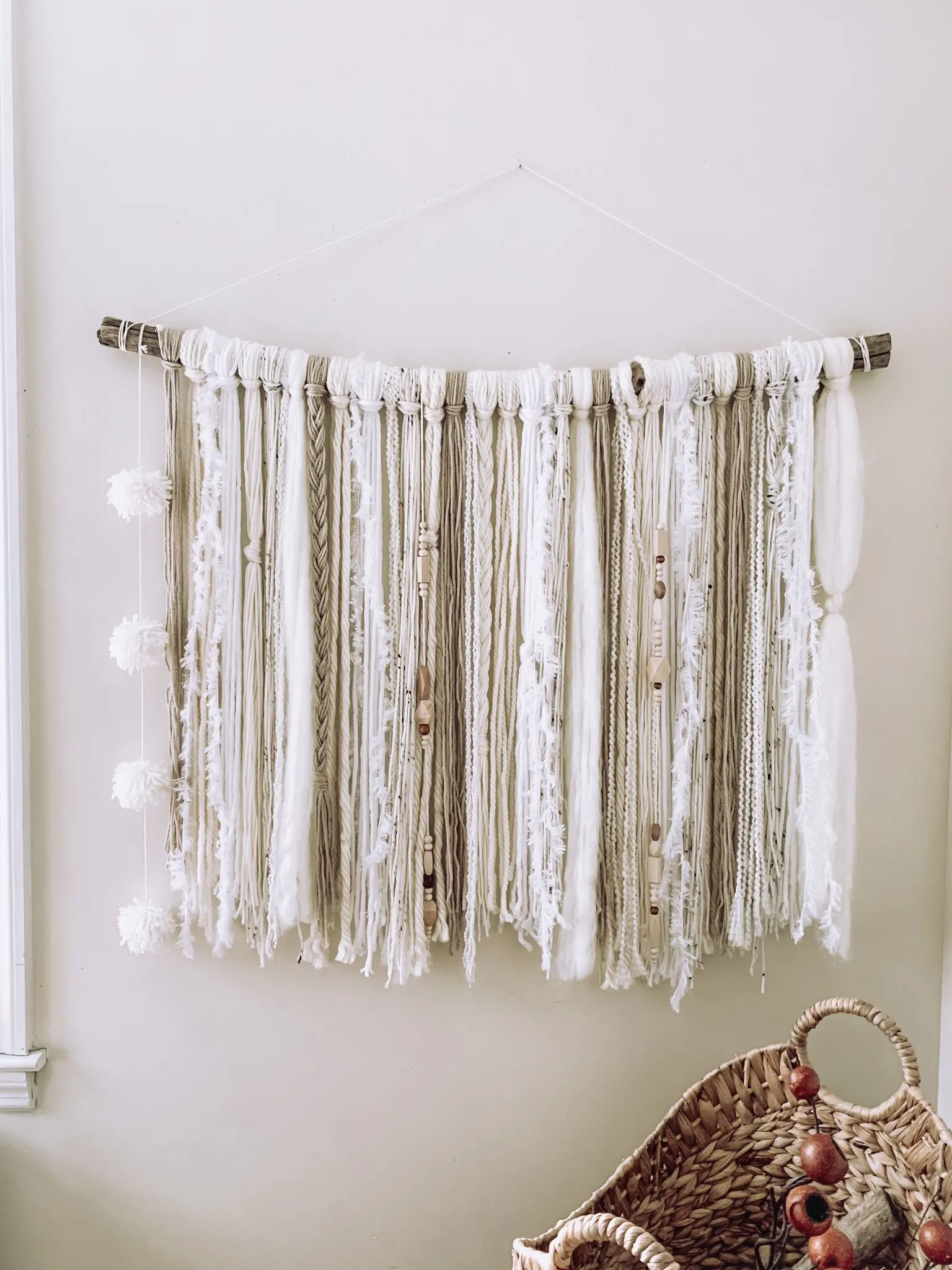
A crochet wall hanging is not a decoration. It is a declaration. It says that you have the patience to work in rounds, the courage to cut fringe, and the confidence to hang your own art where everyone can see it.
The mandala does not need a frame. It needs a wall. The fringe does not need symmetry. It needs movement. And you do not need permission to turn yarn into architecture.
Make it in ocean colors. Make it in sunset colors. Make it in black and cream if that is what your wall demands.