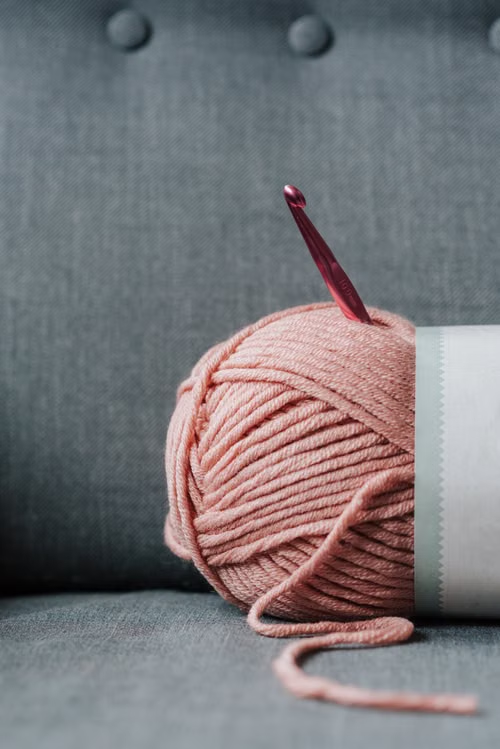
They say the fastest way to slow down time is to learn something new. I disagree. The fastest way to slow down time is to crochet a vest.
Not knit. Crochet. There is a difference, and that difference is the exact reason your brain — yes, yours, scrolling at 2 AM through Pinterest patterns — is quietly begging for this kind of therapy.
Let me explain the illogical logic of it all.
Part I: The Yarn Is a Liar (And That’s Beautiful)
Look at this innocent ball of yarn. Soft. Pink. Docile. You think you’re buying a craft supply. You’re wrong. You’re buying a temporal contract.
Here’s the paradox: yarn is one continuous line. A single thread, mathematically infinite in its divisibility, yet finite in your hands. When you crochet a vest, you are not creating fabric. You are creating loops within loops within loops — a topological miracle where every stitch is both a beginning and an ending.
The ancient Greeks would have lost their minds. Zeno’s paradox asks: if you keep dividing a distance in half, do you ever reach the end? A crochet vest answers: Yes, but only if you enjoy the journey so much that you stop caring about the destination.
Each double crochet is a tiny rebellion against instant gratification. In a world of one-click shopping and 15-second videos, the crochet vest demands something radical: your sustained attention for twelve consecutive hours. And here’s the twist — your brain loves it. The repetitive motion triggers a theta-wave state, the same neural frequency achieved by seasoned meditators. You’re not making a garment. You’re hacking your own consciousness.
Part II: The Geometry of Cozy
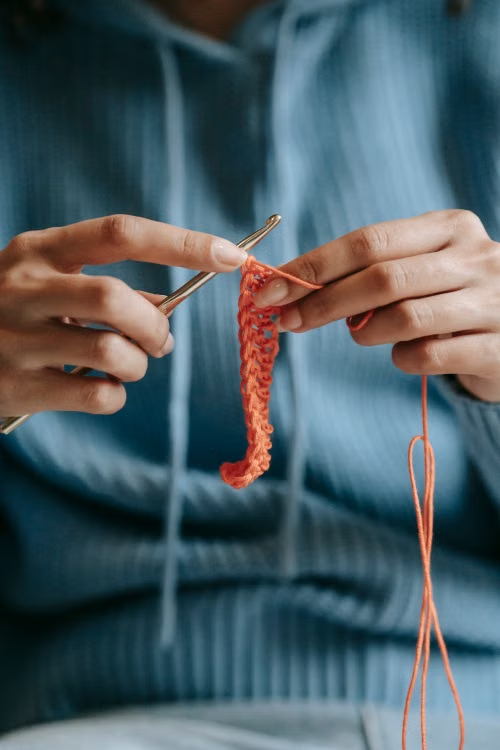
Now, observe the hands. The fingers. The hook piercing the loop with surgical precision.
What you’re witnessing is applied geometry in motion. That zigzag pattern on the vest you saw? It’s not just boho aesthetics. It’s a chevron wave — a mathematical function made tactile. When you follow a crochet vest pattern, you are essentially reading a spatial algorithm and executing it with wool. Row by row, you’re solving a three-dimensional equation where the variables are tension, yarn weight, and your own patience.
But here’s where logic bends: the vest has no seams. Think about that. Unlike sewn clothing — assembled from flat panels like architectural blueprints — a crochet vest emerges as a continuous, organic structure. It grows like coral. Like a snowflake. Like something alive.
Scientists call this emergent complexity: simple rules creating infinitely complex results. One stitch. Repeat. Increase. Decrease. And suddenly — suddenly — you’re wearing a garment that did not exist in the universe twelve hours ago. You have pulled order from chaos, warmth from string, identity from nothingness.
Is it any wonder that people who crochet report lower cortisol levels? You’re not crafting. You’re conducting a symphony of serotonin.
Part III: The Vest as Autobiography
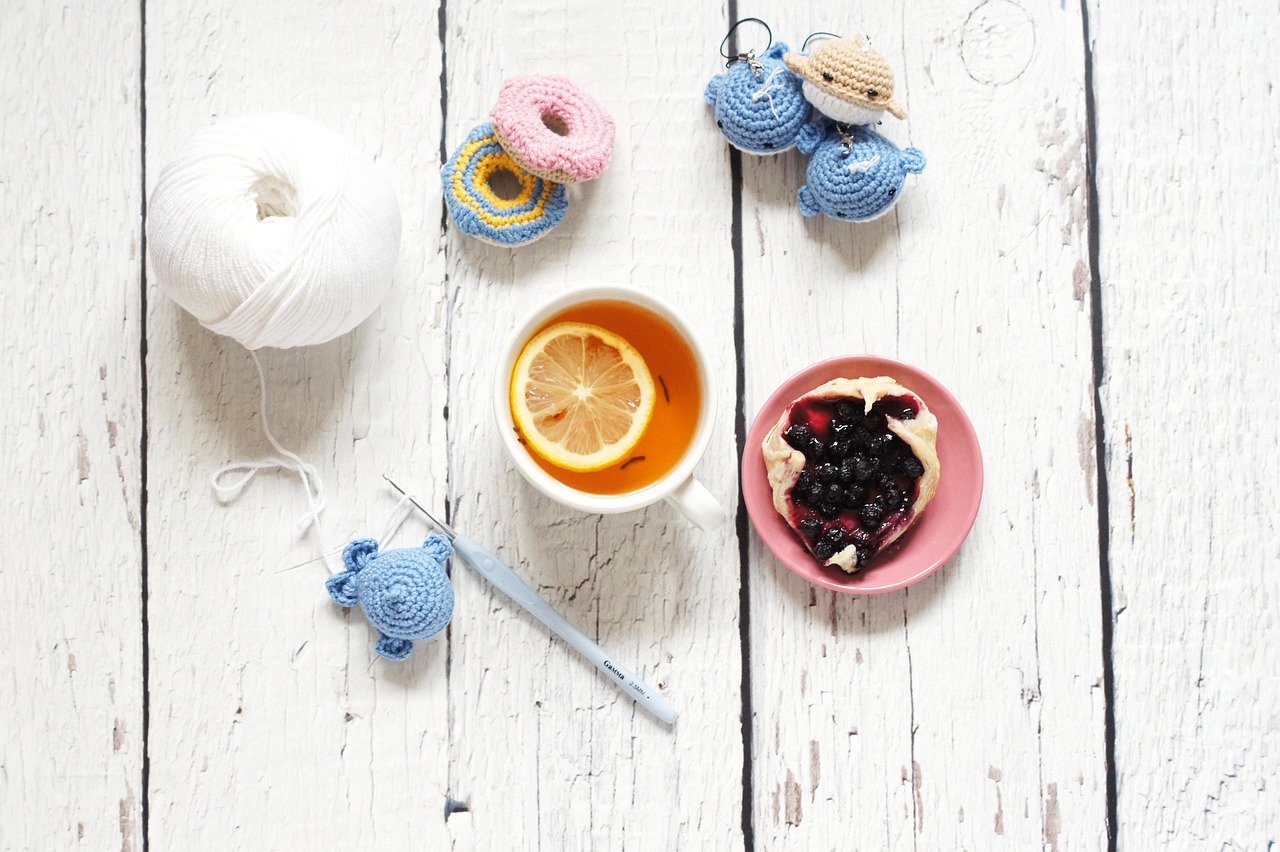
Look at this scene. Tea. A half-finished amigurumi whale. The quiet chaos of creation.
Here’s a secret no one tells beginners: your first crochet vest will be ugly. The tension will be uneven. The armholes will be suspicious. You will wear it anyway, and it will become your favorite piece of clothing. Why?
Because unlike store-bought fashion — designed by strangers, manufactured by machines, marketed to your insecurities — a handmade vest is a memory palace stitched in wool. That uneven row? That was the night your cat sat on the pattern. That slightly tight shoulder? That was the episode of the podcast where you laughed so hard you dropped a stitch.
The vest becomes a diary you wear. Every flaw is a timestamp. Every color choice is a mood ring. The garment does not hide your humanity — it exhibits it.
And here’s the megalogic that breaks consumerism: when you wear a crochet vest, you are wearing proof that you can create. Not consume. Not purchase. Create. In an economy built on making you feel insufficient, the handmade vest is a radical act of self-sufficiency. You looked at a $120 boutique vest and said, “I can birth that from my own hands for $8 of acrylic yarn.” And you did.
Part IV: The Free PDF Paradox
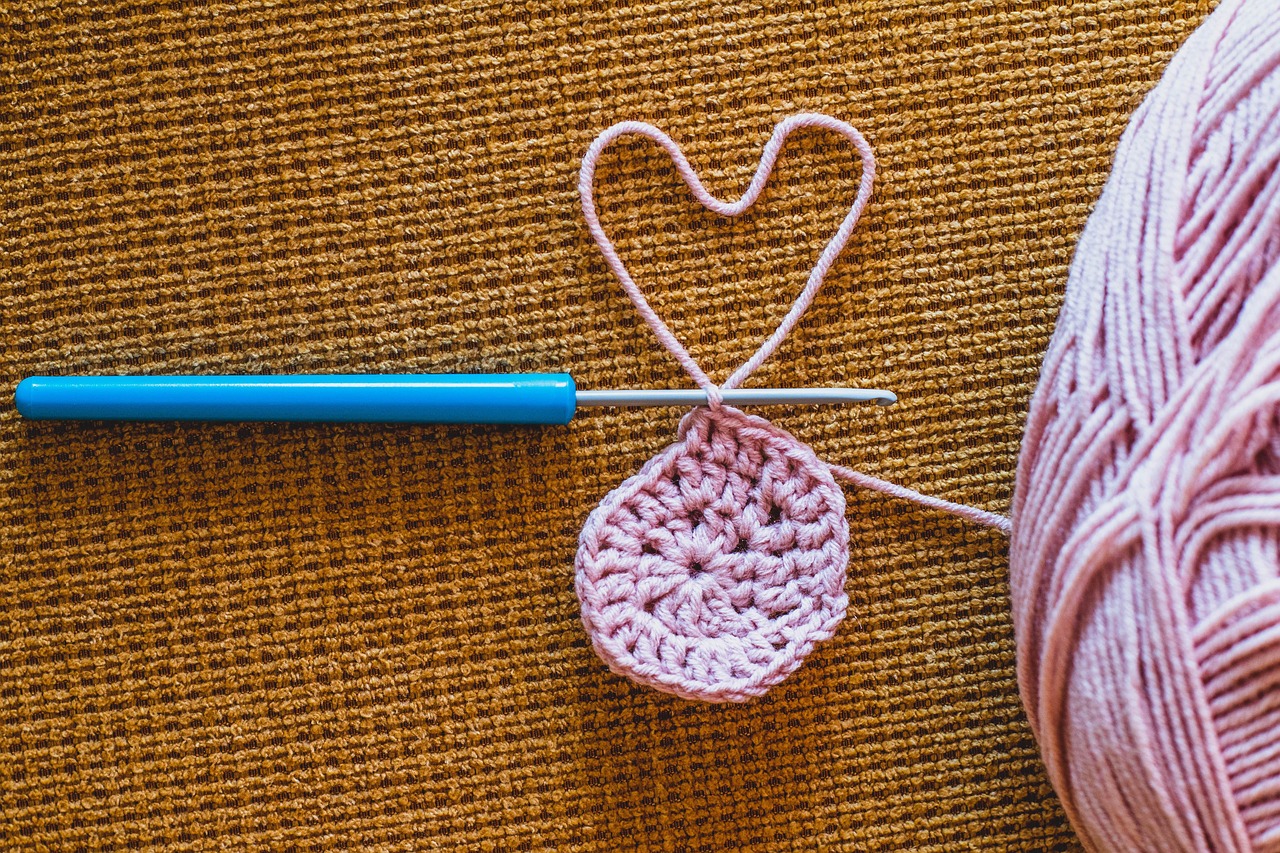
See this? A heart made of yarn. A hook. A beginning.
There is a profound generosity in the crochet community. Millions of hours of pattern-designing, released into the world as free PDFs. Why? Because crocheters understand something that Silicon Valley never will: the best things in life gain value when shared, not when sold.
When you download a free crochet vest pattern, you are entering an ancient contract. The designer encoded their knowledge — their hours of trial, error, frogging, and revelation — into a document that asks for nothing but your curiosity. You take that code, execute it with your own hands, and produce something that keeps you warm. This is open-source philosophy, but for your wardrobe.
The vest, then, is not the end product. The vest is the medium. The real product is the transformation: the person who started with tangled yarn and ended with wearable art. The pattern is just the map. The journey is the destination. The hook is the key.
Epilogue: Wear Your Time
So here is my challenge to you, dear reader. Not “go crochet a vest.” That’s too small.
Instead: go steal back your time. Reclaim the hours that algorithms are eating. Pick up a hook. Make something imperfect. Make something that took too long. Make something that no factory could replicate because no factory has your specific fingerprints, your specific tension, your specific stubbornness.
The crochet vest is not a trend. It is not a hobby. It is a philosophy of slowness in a world obsessed with speed. It is wearable proof that you are patient, capable, and weirdly good at math you never knew you understood.
And when someone asks, “Where did you get that vest?” — which they will — you get to smile and say the four most satisfying words in the English language:
“I made it myself.”
Ready to start? Grab a free pattern, a skein of yarn, and the radical belief that you have enough time to create something extraordinary. Your future self — wrapped in geometric, hand-stitched coziness — will thank you.
Happy crocheting.